Discover Golf in Chiang Mai
Thailand's Cool Climate Golf Escape
Golf in Chiang Mai
Chiang Mai is one of Thailand’s best golf destinations for cooler weather, mountain scenery, and a slower pace on and off the course. It’s ideal if you want quality rounds without the busy “tour golf” intensity of Bangkok or beach hubs.
Courses are typically 30–60 minutes from the main hotel areas, so planning is simple once you choose the right base and group tee times by location.
Highlight for Golfers
- Cool weather tee times (the only city where this is true)
- Mountain views on every course
- Less crowded rounds than the beach hubs
- Genuine tournament pedigree — Alpine hosted the Asian Tour twice
Best for
- Golfers who want to escape Thailand's heat without leaving the country
- Multi-round trips (4-6 days) with real course variety — mountain, parkland, and water-defended layouts
- Early risers — cooler mornings are the best golf of the day here
- Couples wanting cafés and culture, not just golf and beach
Top Golf Courses in Chiang Mai
📋 Researched Guide — I haven’t played any of these four courses myself, so here’s what’s actually true about them: verified facts, tournament history, and what golfers who’ve played them consistently say.
Alpine Golf Resort
Chiang Mai
Designed by American architect Ron Garl, Alpine is a 27-hole layout carved through the San Kamphaeng forests, and it’s earned its reputation the hard way — it hosted the Asian Tour’s Chiang Mai Classic in 2013 and 2014. One detail stands out even on paper: one of its par-3s plays through Thailand’s only rice paddy green, a hole you genuinely won’t find anywhere else in the country. It’s a serious test from the back tees, but built so club golfers enjoy it too — not just survive it.
Best For: A flagship round with real tournament credentials, and a genuinely unique hole you won’t find anywhere else in Thailand.
Chiang Mai Highlands Golf & Spa Resort
Designed by Brian Curley and Lee Schmidt in 2005, Highlands earned its reputation fast — named one of the Top 3 New Courses in Asia in its first year, and later voted one of the Top 3 Courses in Thailand by Asian Golf Monthly readers. The 27-hole layout sits in the foothills east of the city, and the signature feature is consistency: paspalum fairways and Tiff Eagle greens keep the course playing fast and clean year-round, with mountain views following you on every hole.
Best For: Golfers who want resort-level conditioning and a course that’s earned its “top 3 in Thailand” reputation, not just claimed it.
Summit Green Valley
Golf Club
Designed by Dennis Griffiths — the same architect behind Thai Country Club in Bangkok — Summit Green Valley trades mountain drama for a different kind of test: flat, lowland terrain where water and bunkers do the defending. Built on former paddy fields, the course stretches over 7,200 yards from the back tees, and its location close to the city and airport makes it the most practical choice for an arrival-day or departure-day round.
Best For: A genuinely tough test in a hurry — close to town, easy logistics, no half-day commitment required.
Gassan Legacy
Golf Club
Don’t let the modest yardage fool you. Water comes into play on virtually every hole at Gassan Legacy, the result of a 2013–2014 renovation by American design firm Schmidt-Curley that turned an aging layout into one of the region’s most demanding accuracy tests. Five par-3 holes ranging from 90 to 180 yards mean you’ll use most of the bag just on the short holes alone — this is a course that rewards careful play over raw power.
Best For: Golfers who’d rather out-think a course than overpower it — bring extra balls.
Recommendation Box
This isn’t a personal pick — it’s the logical pairing based on what each course is known for. Alpine is the flagship round if you want tournament pedigree and a genuinely unique hole, and Chiang Mai Highlands pairs well with it as the second premium round for golfers who care about conditioning and consistency as much as the challenge. Summit Green Valley is the practical choice for an arrival- or departure-day round since it’s close to the airport, and Gassan Legacy is worth adding if your group would rather out-think a course than overpower it. With courses spread 30–75 minutes apart depending on direction, group tee times by area where you can to avoid unnecessary backtracking.
Just Want One
Great Round?
Book Chiang Mai Highlands. It’s been voted one of the Top 3 courses in Thailand by Asian Golf Monthly, the conditioning is genuinely consistent thanks to its paspalum fairways and Tiff Eagle greens, and you get mountain views on every hole without needing tournament-level skill to enjoy it. Pair it with an early tee time to beat the heat, and you’ll have a full day left for temples or the night markets.
Where to Stay in Chiang Mai
Chiang Mai Old City
Stay here if you want temples, cafés, and a classic Chiang Mai atmosphere right outside your hotel — the natural choice for golfers who like easy sightseeing and relaxed evenings between rounds. It's also the furthest from most courses, so budget extra time for early tee times.
Typical transfer to course: 30-75 minutes
Best for
- Temple are walkable
- Classic Chiang Mai evenings
- Easy sightseeing between rounds
Watch out
- Narrow streets
- Older hotels
- Pickups slower at peak hours
Nimmanhaemin ("Nimman")
Stay here if you want Chiang Mai’s best café and dining scene, modern hotels, and a more contemporary vibe after golf. Great for golfers who like comfort, convenience, and easy nights out.
Typical transfer to course: 30-65 minutes
Best for
- Cafes & dining
- Modern hotels
- Trendy nights
Watch out
- Quite lively at night
- Peak hour traffic
- Less 'Old City' charm

Mae Rim
Mae Rim sits northwest of the city in a quieter, more rural setting — the natural base if Summit Green Valley is on your list, and close to several other courses too. It's a good fit if you want resort calm without being far from golf.
Typical transfer to course: 10-25 minutes
Best for
- Quiet, nature-focused stays
- Resort-style calm
- Trips centered on Summit Green Valley
Watch out
- Limited walkable dining
- Further from Old City/Nimman nightlife
- Transport essential for evenings out
San Kamphaeng
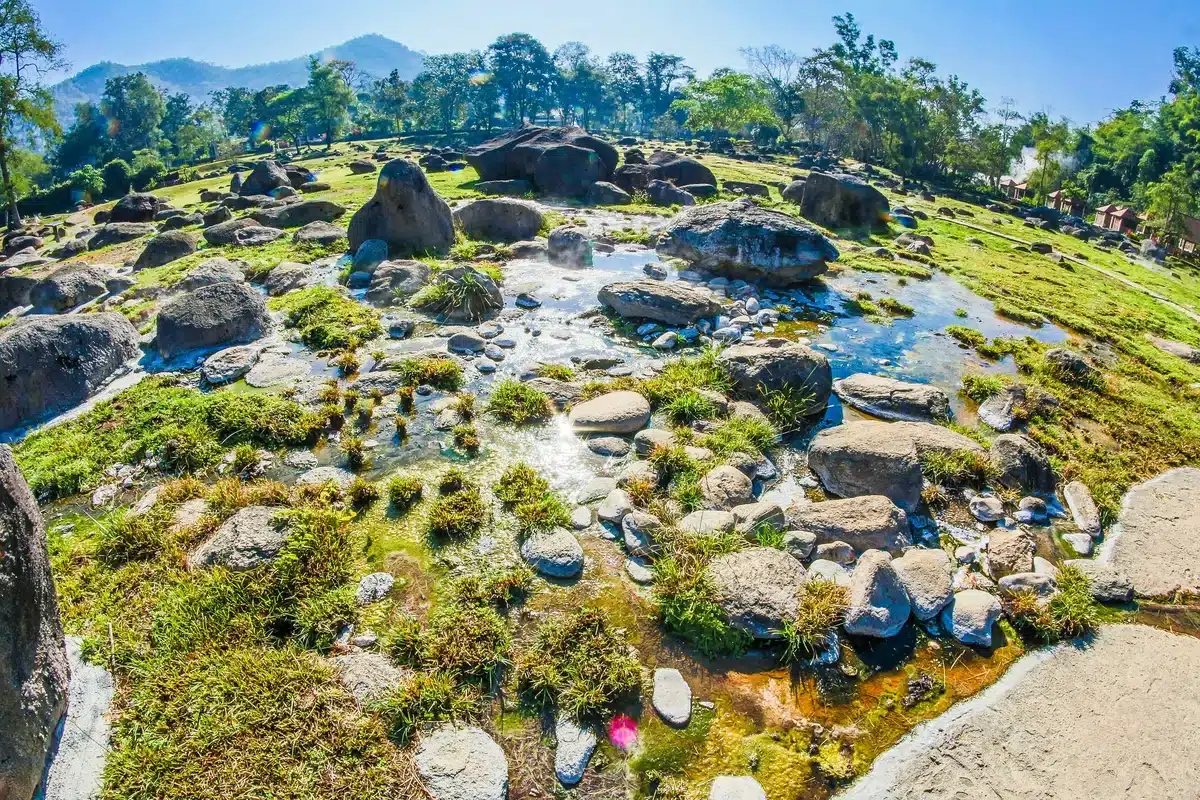
East of the city, San Kamphaeng is where Alpine and Chiang Mai Highlands golf courses both sit. Set in forested valleys with genuinely scenic drives in. It's the right base if your trip centres on either of those two courses, and it's also close to the San Kamphaeng Hot Springs for a true rest-day option.
Typical transfer to course: 15-30 minutes
Best for
- Trips centered on Alpine or Highlands
- Scenic, forested surroundings
- A rest-day hot springs visit between rounds
Watch out
- Furthest from city nightlife
- Limited dining outside resort properties
- Best suited to golf-focused trips
Local Highlights in Chiang Mai
📋 Researched Guide
Chiang Mai’s downtime is built for golfers who want more than a round and a hotel room — centuries-old temples, a genuine café culture, real mountain day trips, and markets that don’t feel like a tourist trap. Between rounds, that’s a rare combination in Thailand.
Cafes & Nimman
Nimmanhaemin is where Chiang Mai’s café culture actually lives — a walkable grid of specialty coffee, design-forward spaces, and boutique shopping. It’s less about ticking off a sight and more about having somewhere genuinely good to spend a few hours between rounds.
Ristr8to
One Nimman
Maya Lifestyle Shopping Centre
Good To Know
Night Markets
Chiang Mai’s night markets are a relaxed way to close out the day — street food, local stalls, and a casual atmosphere that doesn’t demand much after 18 holes.
Sunday Walking Street
Warorot Market
Chiang Mai Night Bazaar
Good To Know
Mountain Viewpoints & Temples
Chiang Mai’s mountains aren’t just scenery from the course — they’re some of the best half-day trips in the city, combining temples with genuine elevation and views.
Wat Phra That Doi Suthep
Doi Inthanon National Park
Wat Phra That Doi Kham
Good To Know
Nature Breaks
Short trips out of the city for golfers who want more than temples.
Mae Kampong Village
A hillside village built around a stream, known for its waterfall, tea and coffee culture, and riverside cafés.
Mon Jam
A mountain viewpoint about an hour out, popular for panoramic valley views and, if you go early, a "sea of mist" below the hills.
Sticky Waterfall (Bua Thong)
A limestone waterfall you can actually climb thanks to its unusually grippy mineral surface, good for something more active
Good To Know
Old City Temples
Chiang Mai’s spiritual heart, walkable in a single afternoon. The Old City is packed with centuries-old temples, and you don’t need a plan to enjoy it — just wander and step into whatever catches your eye. A few worth prioritizing if your time is limited:
Wat Phra Singh
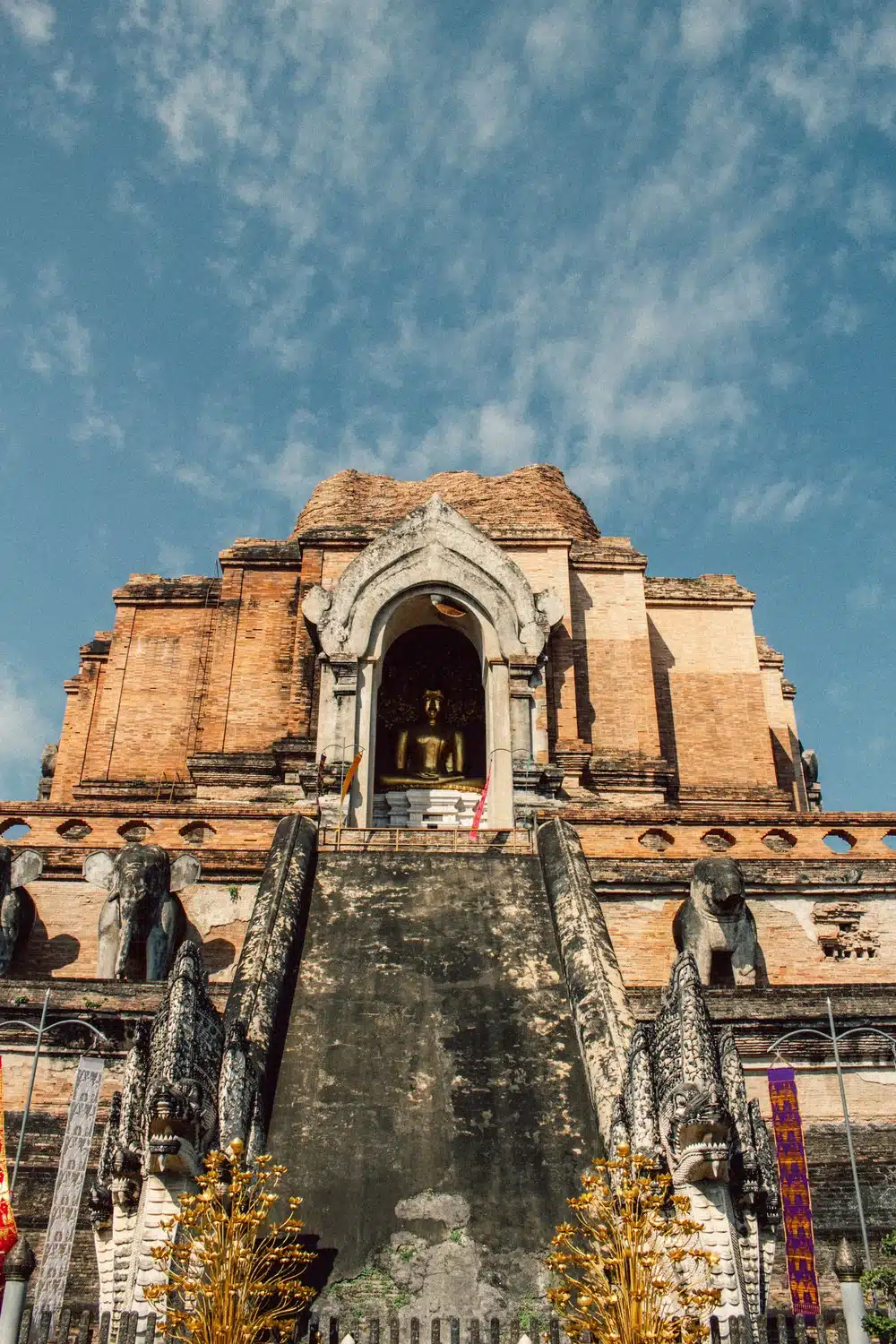
Wat Chedi Luang
Wat Chiang Man
Good To Know
Travel Tips for Golfers in Chiang Mai
Planning a golf trip in Chiang Mai is simple once you understand the distances. Most top courses are outside the city, so your experience depends on choosing the right base, grouping tee times by area, and timing your rounds around weather and traffic. Use the tips below to keep transfers smooth and your days relaxed.
Best Time to Play (Weather & Comfort)
Chiang Mai’s most comfortable golf season is November to February, with cooler mornings, less humidity, and the best overall conditions. March to April can be hot and hazy, and comfort depends heavily on air quality. The rainy season (May to October) is still playable, but showers are more common later in the day.
Good to know: Peak season is comfortable, but tee times sell out faster than you’d expect.
Tee Times & Peak Season Demand
During peak months (especially Dec–Feb), popular courses can fill up—especially for weekend mornings. Planning ahead matters more in Chiang Mai because you don’t want to drive 45–60 minutes only to be stuck with a poor slot.
Good to know: Weekend mornings in Dec–Feb can fill quickly, so lock your key rounds early.
Burning Season & Air Quality
If you’re sensitive to heat or air quality, the main risk window is March–April. Some days are fine, some days are noticeably uncomfortable outdoors. It doesn’t “ruin” the trip for everyone, but it’s a real factor if your group plans multiple rounds.
Course Transfers (What to expect)
Courses are typically 30–75 minutes from Chiang Mai’s main hotel areas, depending on traffic and which side of the city you’re heading to. Transfers are part of the Chiang Mai golf experience, so you’d want a schedule that doesn’t feel rushed.
Transport Options (Driver vs Grab)
Most visitors use a private driver or pre-arranged transport, especially for groups or multi-round trips. Ride-hailing can work in the city, but reliability varies once you’re farther out near courses.
What to Pack (Small things that matter)
Chiang Mai mornings can feel cool in peak season, while afternoons warm up fast. Pack light layers, sun protection, and rain cover if you’re visiting in wetter months.
Green Fees & Budgeting
Chiang Mai usually offers strong value. A practical planning range is around ฿1,400–฿3,200 per round, plus caddie and cart fees depending on the course and season.
Good to know: Peak season pricing and premium facilities can drive costs higher, but Chiang Mai feels like you’re getting better value.
Caddies, Carts & Tipping
Caddies are commonly required and add real value if you’re new to the course. Carts are common and useful. Tipping is customary and varies based on service and overall experience.
Good to know: Chiang Mai is generally relaxed. Service is friendly, and the vibe is less “formal” than premium Bangkok clubs.
Frequently Asked Questions - Golf in Chiang Mai
Yes, especially if you want to escape the heat. Chiang Mai is the only golf city in Thailand with genuinely cool mornings, mountain scenery on every course, and tournament-pedigree layouts like Alpine, which has hosted the Asian Tour twice. It’s a strong pick if you’ve already done a beach or city trip and want something different.
Chiang Mai trades sea-level heat and crowds for cooler air, mountain views, and a slower pace. Transfers run 30–75 minutes depending on the course, longer than Hua Hin’s 15–35 but in exchange for a genuinely different climate and scenery. It suits golfers who’ve already played Bangkok or Phuket and want contrast, not repetition.
A 4–6 day trip comfortably fits 3–4 rounds, with room for temples, cafés, and a rest day. Because Chiang Mai’s courses cluster in two directions from the city (Mae Rim and San Kamphaeng), grouping rounds by area cuts down on backtracking.
For Alpine and Chiang Mai Highlands, yes — especially weekend mornings from November to February. Book 1–2 weeks ahead. Summit Green Valley and Gassan Legacy are generally easier to book closer to your trip.
es. With courses 30–75 minutes out and ride-hailing reliability dropping the farther you get from the city, most visitors arrange a driver, especially for multi-round trips or groups.
Standard Thailand golf dress code: collared shirts, proper golf shoes, no jeans or sandals. Alpine, given its Asian Tour history, tends to enforce this more strictly than the more relaxed courses around Lamphun.
March–April can bring haze and reduced air quality from regional agricultural burning. It doesn’t ruin every day, but it’s worth knowing about if you’re sensitive to air quality or planning multiple rounds — November to February avoids it entirely and is the most reliable window.